A Book Review
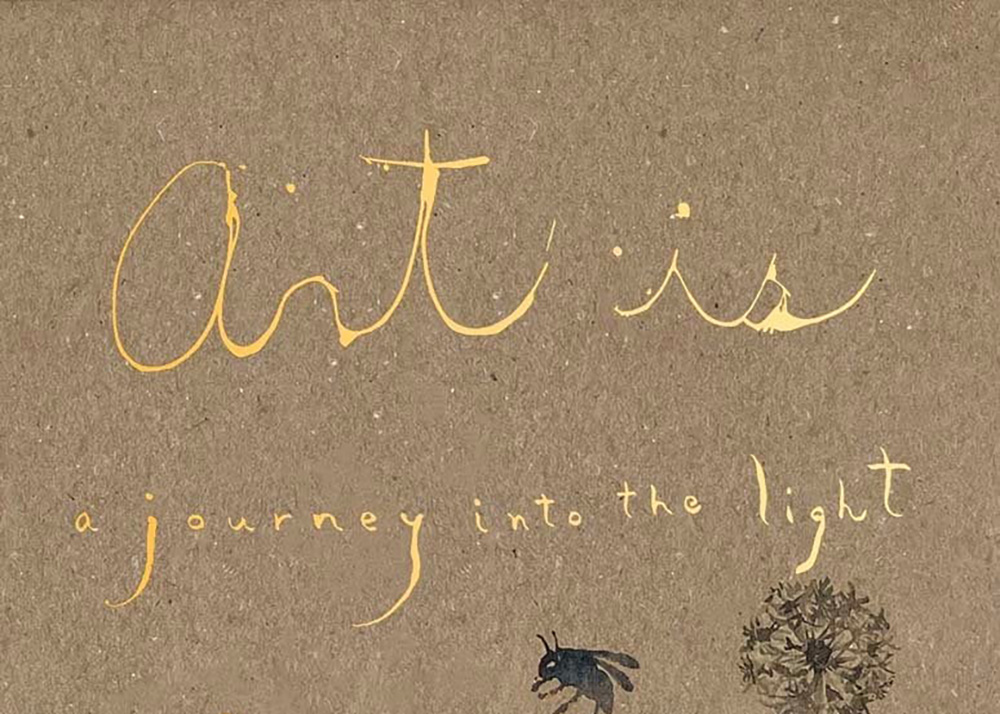
Art Is: A Journey Into the Light
By Makoto Fujimura
Yale University Press, 224 pages, $30
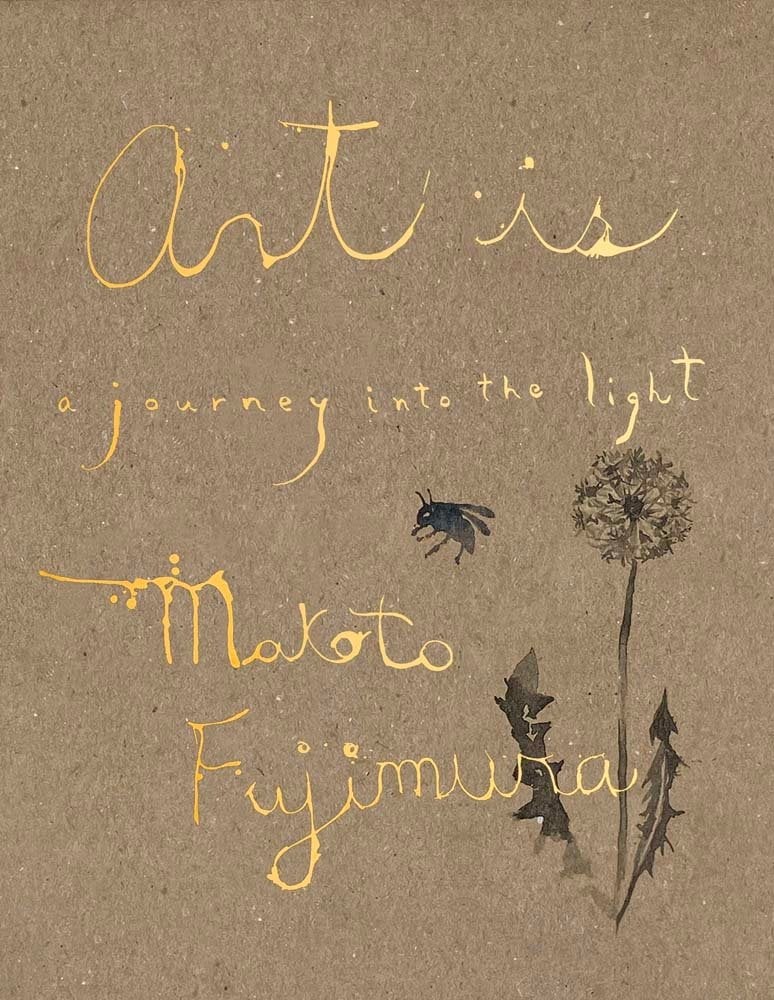
“Dandelion,” an elegant sumi ink drawing created by Makoto Fujimura, is one of several dozen color art reproductions included in his latest book, Art Is. This intimate drawing belongs to a series Fujimura calls “essentiations,” and its scale is a striking counterpoint to his large-format, abstract Nihonga paintings.
These contrasting visual forms gesture to other formative juxtapositions in the artist’s life. For instance, he was born to Japanese parents, but was raised primarily in the United States; he completed an undergraduate degree at Bucknell University and later pursued graduate studies at Tokyo University of the Arts; for many years he lived in New York City, but after the trauma of 9/11 moved to a small farm in Princeton, New Jersey. Wed to his deep Christian convictions, these diverse cultural locations form the foundation of Fujimura’s aesthetic, even as the open space between them often causes him to wonder where true home may be found.
In Culture Care (2017), Fujimura expressed deep concern about late modern habits that reduce the world to utilitarian functions, embrace culture-war strategies, and squander nature’s transcendent beauty. While Art Is carries those worries, it travels beyond social discourse and lands squarely in his studio, a converted horse barn. For Fujimura, the studio is a place of aesthetic and spiritual encounter, one that embodies what he calls his Silk Road journey.
The main event in his studio is Nihonga, and he introduces us to the method. It involves applying many layers of pulverized minerals—azurite, cinnabar, gofun, and malachite—blended with nikawa, an animal-based glue, to mulberry paper or linen. This is where the magic happens.
Once dried, the minerals refract light, and while subtle figures may appear, the work is mostly abstract. The personal reflections that accompany his account of his studio practice range from seasons of personal doubt to moments of keen insight, even revelation. Hence Fujimura’s invitation to journey with him into the light and toward God.
While this handsome book is rewarding, some may find his conceptual passages difficult. Consider this example:
Our journey in the light is a prismatic journey toward a spectrum of generative and abundant possibilities, but our present powers, languages, and structures do not allow us to have a language to dream with, as dreams are made of fragile and impossible hopes. We are too fragmented and polarized, our soil too tainted with the poison of culture wars to grow lasting cultural crops, or to even envision a common march toward the Promised Land of plenty.
Passages like this remind readers that Fujimura is a border-stalker (his term) roaming far and wide through a lot of territory. While these cultural, philosophical, and theological forays often yield insight, Fujimura’s broad inclusion of everything from slow art, estuaries, and soliloquies to culture wars, the algorithms of consumer capitalism, and the trauma of modern life can feel like an overload.
Once I settled into the book, however, I recognized the connection between his Nihonga studio practice and the gathering complexity of his discourse. Both are born of slow processes, the former applying many mineral layers on top of each other, the latter cultivating a lattice of sources, ideas, and metaphors. Together, they are his body of work.
In pursuit of God’s light, a second challenge present in this book has to do with abstraction. To the extent that we encounter the world as mystery, abstract art, music, and poetry can be a ready means to represent our unknowing, and for Fujimura the work of color-field painter Mark Rothko is an exemplar.
But is abstraction the sturdiest container for representing the great mystery of our being? I’ll wager a qualified yes, at least in the Pauline sense of seeing through a glass darkly. And yet an ancient and compelling case might also be made for the concrete particularity of second- and third-century Christian icons.
While Art Is encourages readers to join Fujimura on his journey toward the light, its real charm, I think, is to embrace his invitation to walk with him along the stone path that leads from his house through the natural beauty of the seasons and into his studio.
Reposted from The Living Church.