
Lorraine Ortner-Blake is a surehanded calligrapher and capable painter. Over the years I’ve commissioned her to create awards, texts to adorn public spaces, and gifts for friends. But a year ago I asked Lorraine to create a special piece for my daughter, Emilie.
I
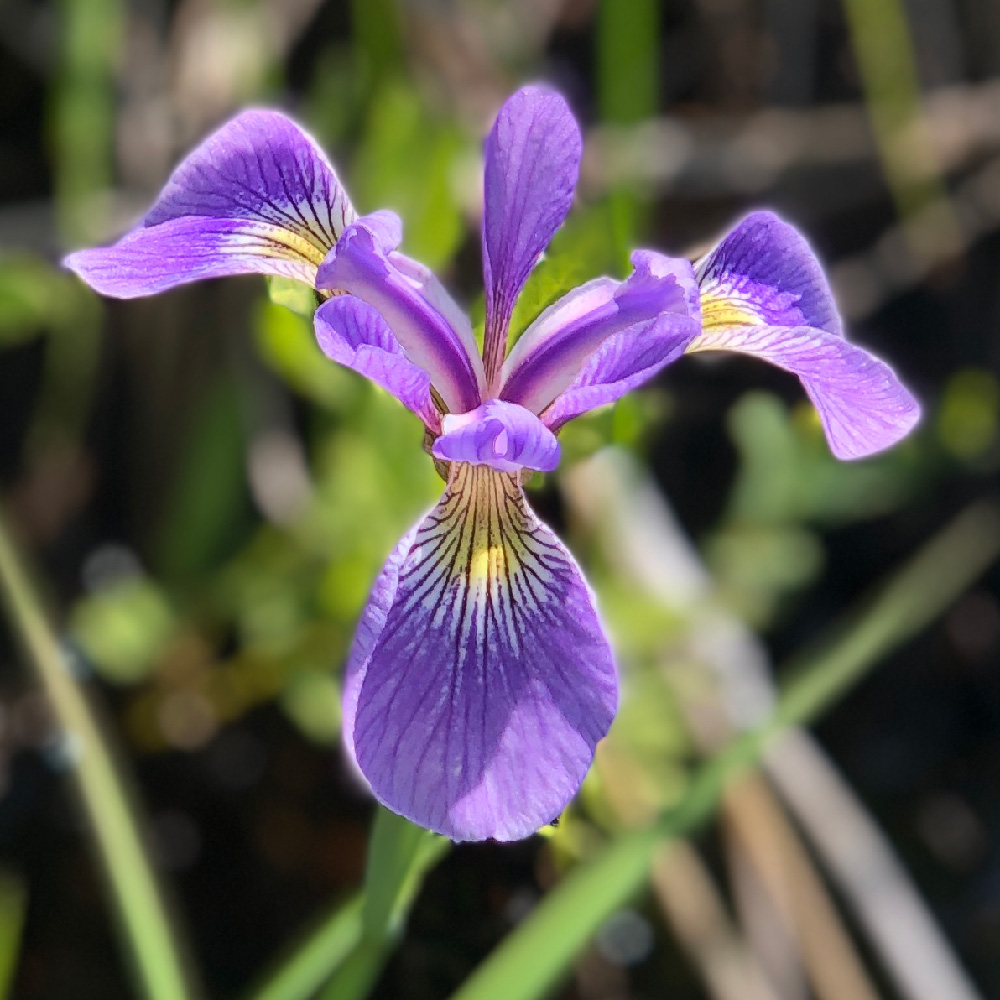
When our children were young we spent portions of many summers at Cedar Campus, a Christian retreat center located in the Les Cheneaux Islands along Lake Huron in Michigan’s Upper Peninsula. From late May to early September this unique biome abounds in wildflowers. As soon as Jesse and Emilie were able, my good wife, C. K., hiked the trails with our children pausing to name each flower along the way. She kept a record of their discoveries in a tattered spiral notebook and after moving her to memory care last July, I was relieved to find it. I faithfully transcribed the list and sent it to Lorriane. Last August I paid my first visit to her studio in Portage, Wisconsin to pick it up. I was eager to see the completed piece.

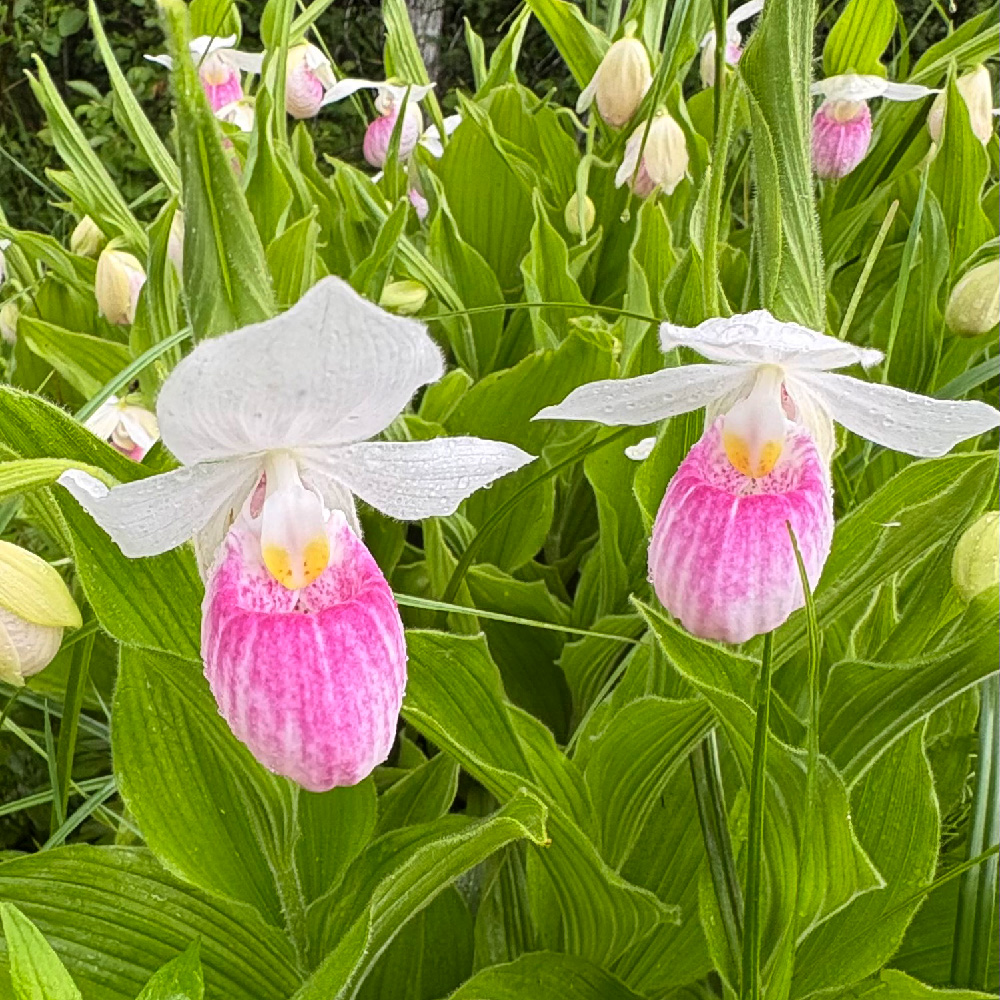
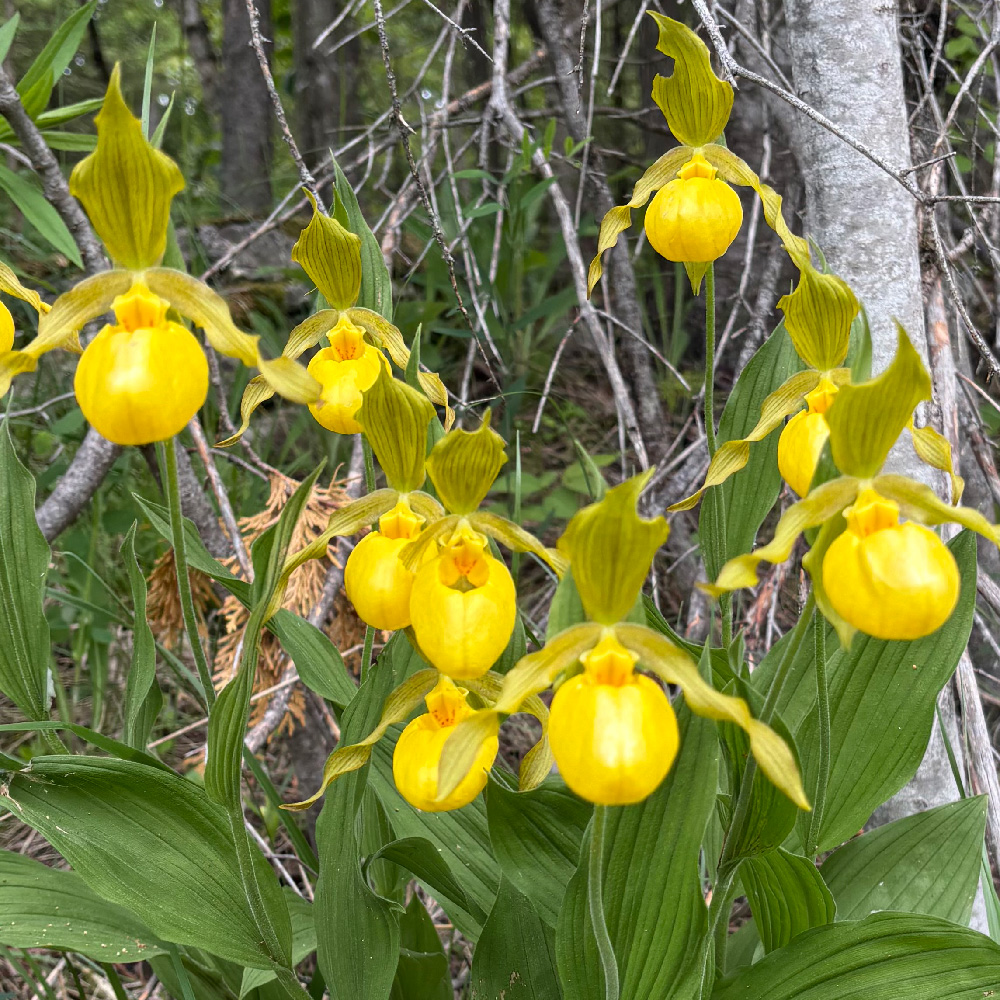
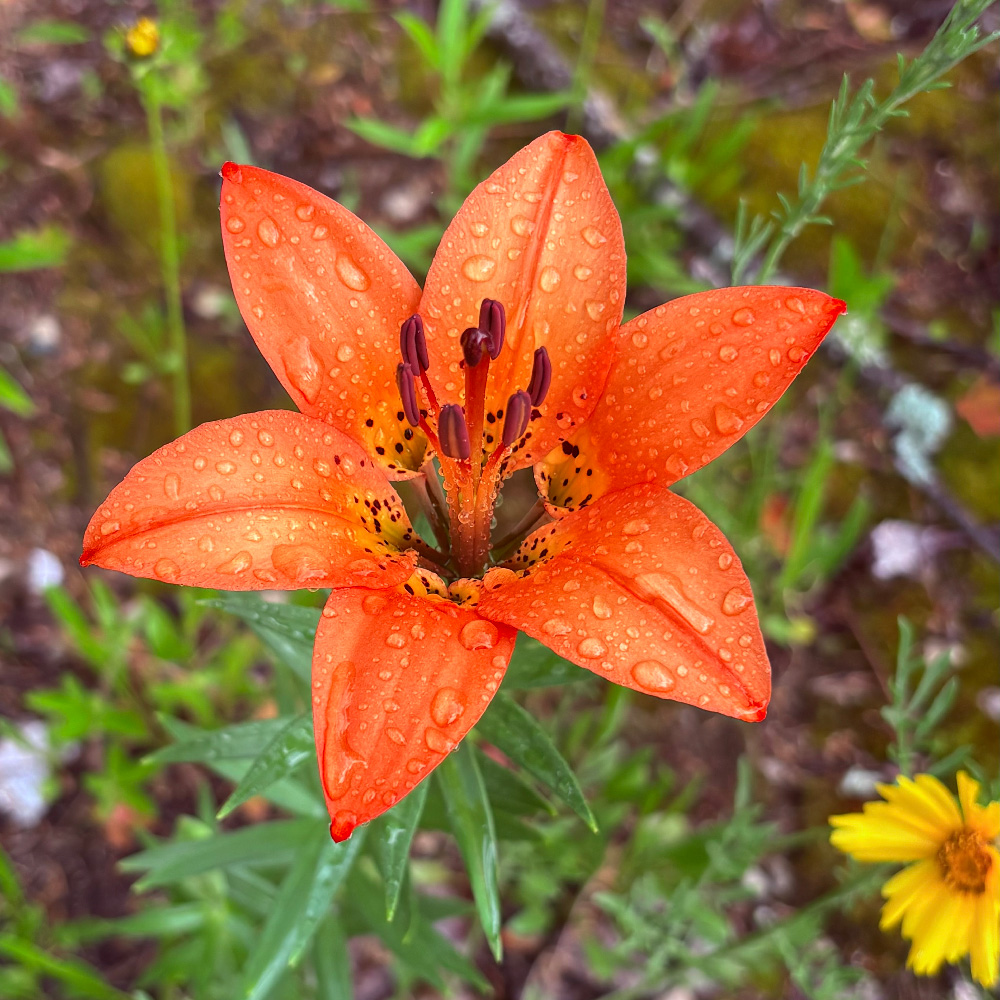
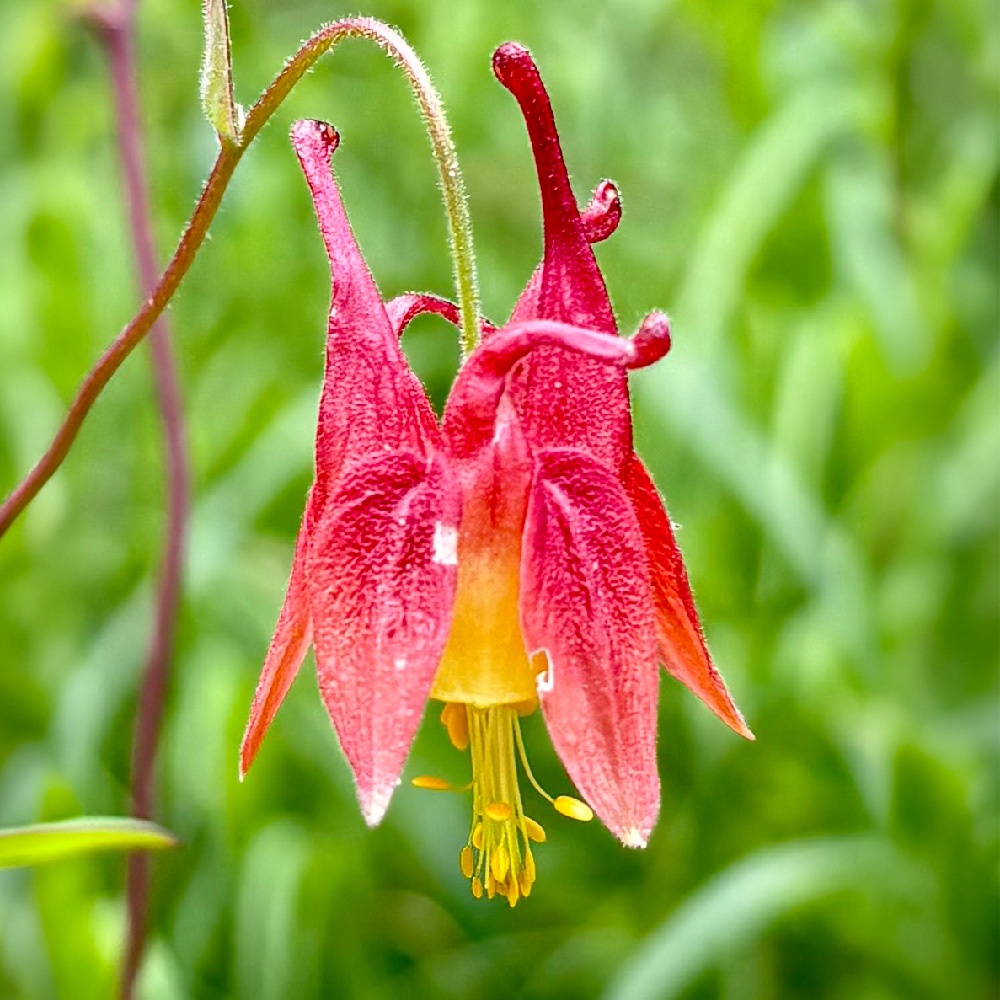
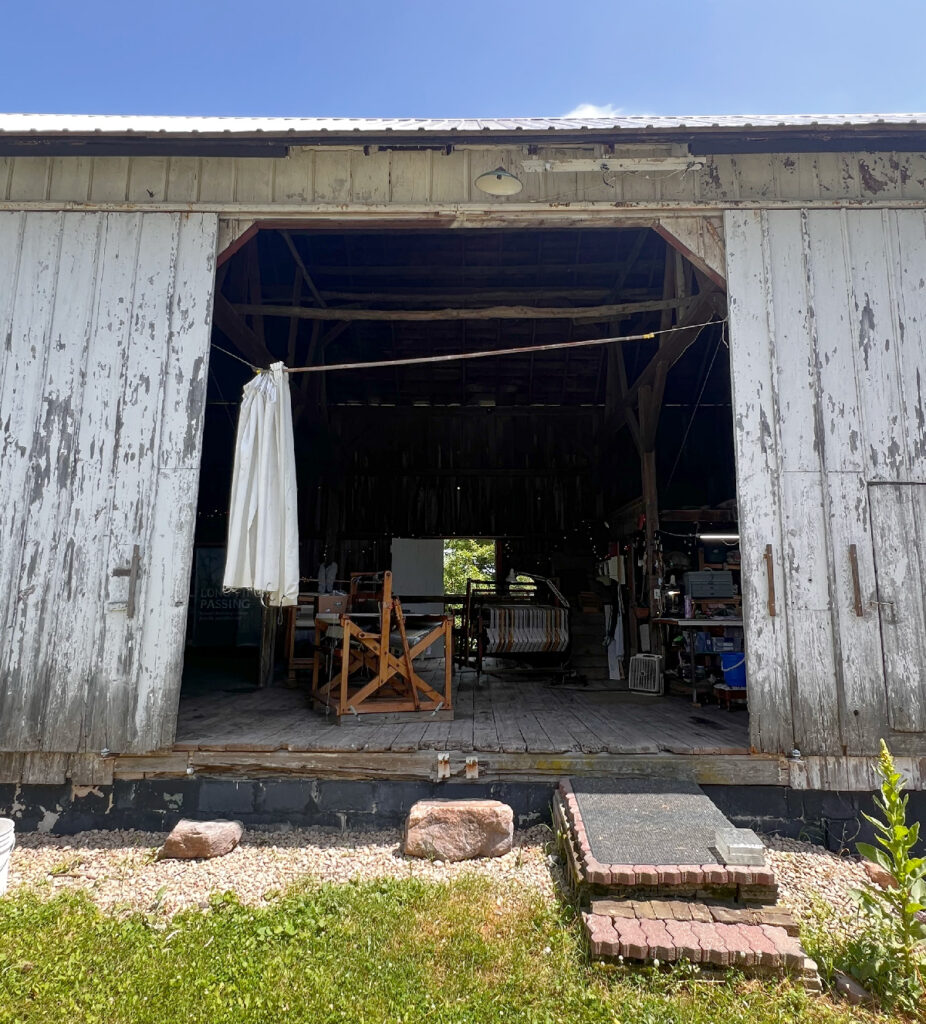
After rounding the corner through thick woods, I pulled up the gentle rise between Lorraine’s house and barn. As I stepped from the truck, she called, “Come on up, I have your artwork. But watch your step, those bricks are a bit loose.” The sliding door of the sturdy white building was open wide and in short order Lorraine laid her freshly calligraphed sheet on the worktable. “Let’s take a look.” As planned, the header on the 18 x 24 inch rag paper read “Cedar Campus Wildflowers, compiled by C. K. Anderson.” Beneath, the names of 55 species neatly arranged into two columns . . . baneberry, indian paintbrush, pearly everlasting. Lorriane had worked her magic. Our daughter and son-in-law had just purchased their first home and this lettered page was my housewarming gift.
II
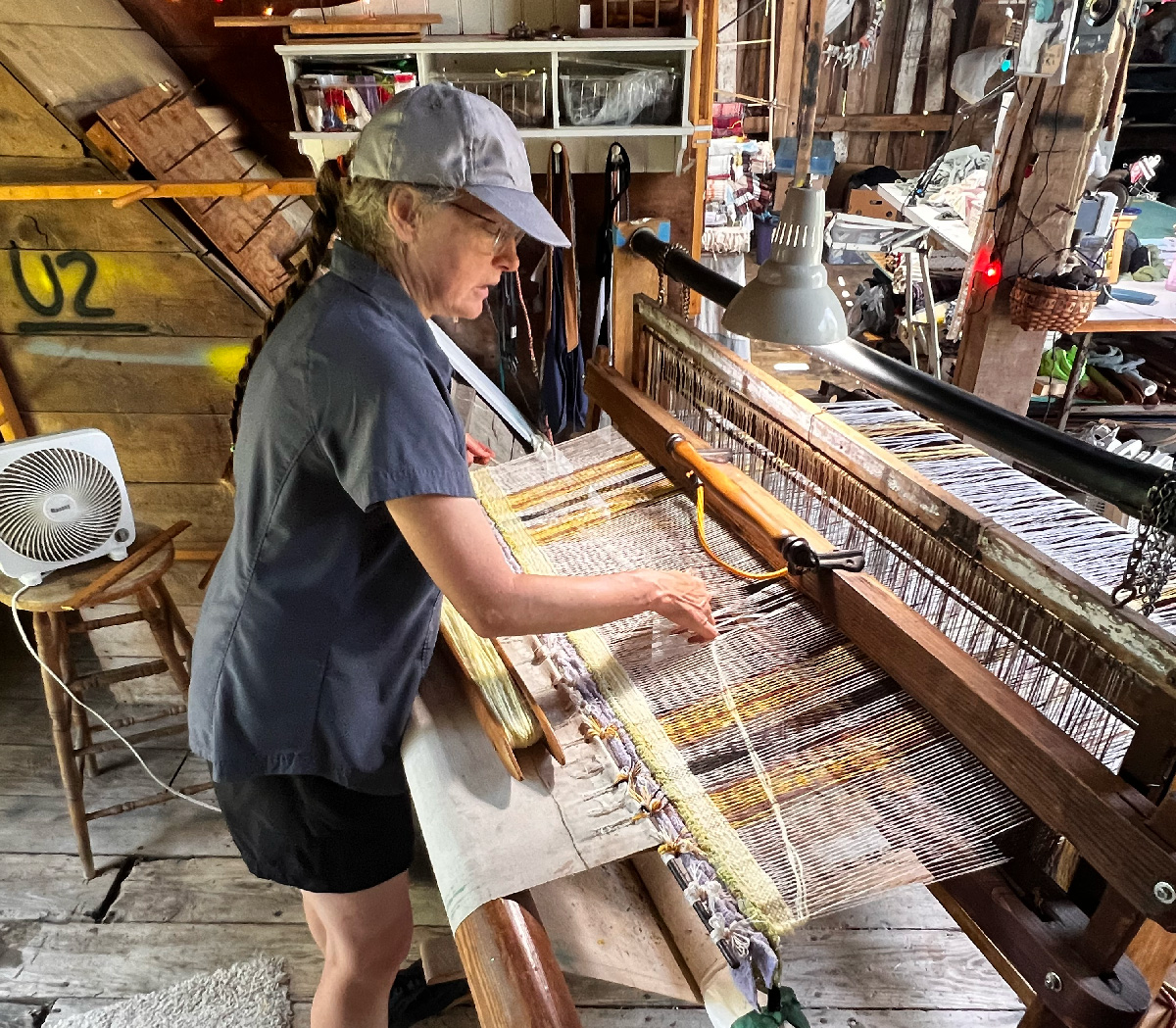
That first visit to Lorraine’s farm contained a surprise. When I stepped onto the thick planks of the barn’s mow, three looms greeted me. Lorraine was a weaver! Wanting to see her work, she obliged and set out two piles of rag rugs for me to examine and I flipped through them. One with brilliant indigo stripes caught my eye. It would pair nicely with my grandfather’s old rolltop desk, so before leaving, I paid Lorraine for the calligraphy and a new rug. Later she explained, “When I was a girl, I dreamed one night that I had a haymow filled with fabric. Isn’t it strange, this barn is quite literally that dream come true.”
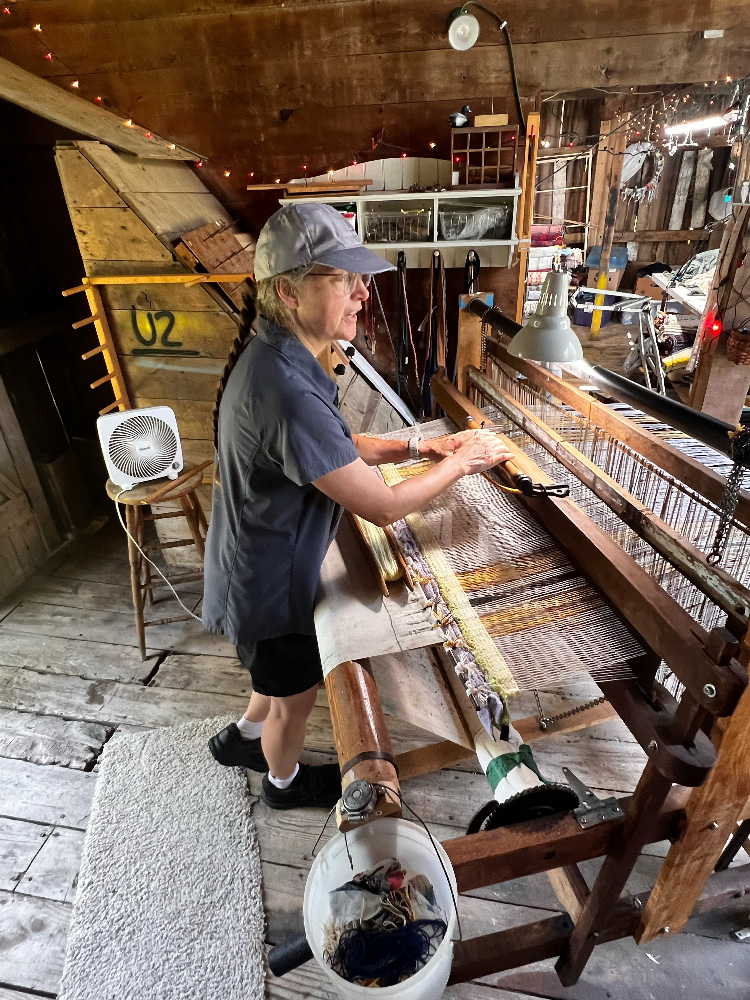
Curiosity piqued, I wanted to know more about Lorraine’s tools and process. Her collection of looms has a storied history. She purchased the Newcomb 2-harness counterbalance rug loom for just $20. Known as a heavy-duty 1880s barn loom, she explained that her husband “MacGyvered” it into excellent working condition. She also owns a Depression era Union 36 2-harness counterbalance loom that was manufactured in Booneville, New York. Then there is a Nilus LeClerc 4-harness jack loom produced in the ‘70s by LeClerc Looms in Quebec, Canada, founded in the 1880s. Lorraine’s fourth loom is a Beka 8-harness jack loom made in the ‘80s in St. Paul, Minnesota. She calls it her winter loom since it “lives in their house when the weather is too cold to work in the studio.” What is “too cold,” I asked. “Oh, when it gets below 30o, so most of January and February.” Their barn is unheated.
A finished medium-sized rag rug represents eight or more hours of work. Fingers and forearms strong and taut, Lorraine begins by trimming long strips of denim, wool, and cotton from old clothing by hand with a shears. “I love working with forlorn clothing and weary fabrics. From auctions and garage sales, every piece has its history. Making the rug, upcycling these fibers, is a sort of resurrection.” When I visited her studio last week, she pointed to a rack of vintage wool coats and jackets soon to be repurposed.
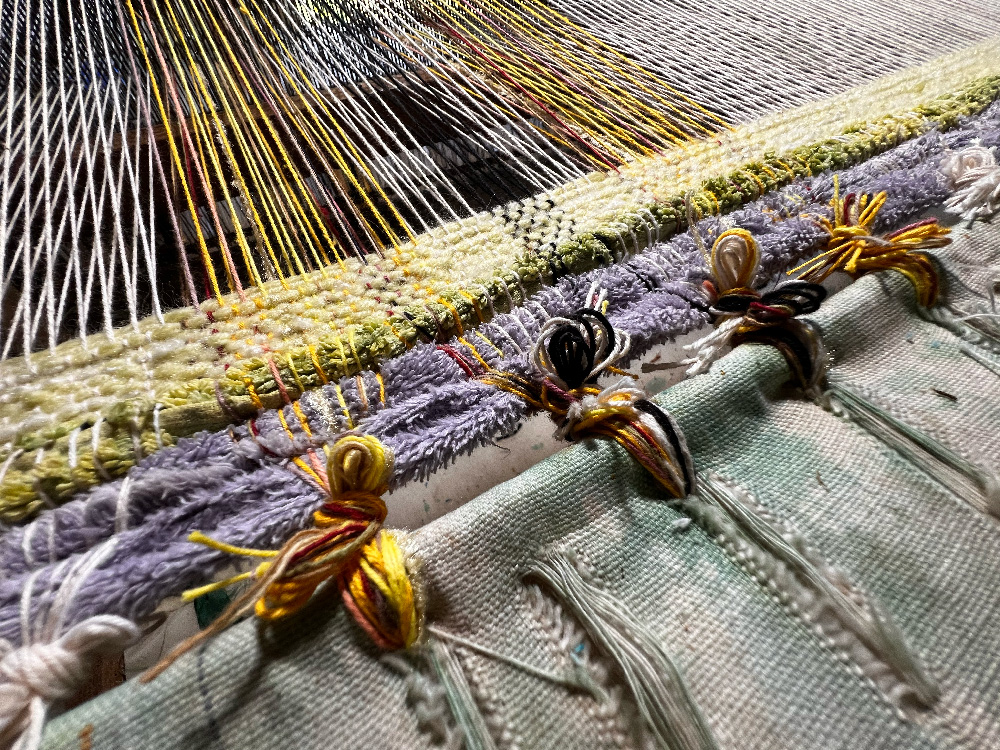
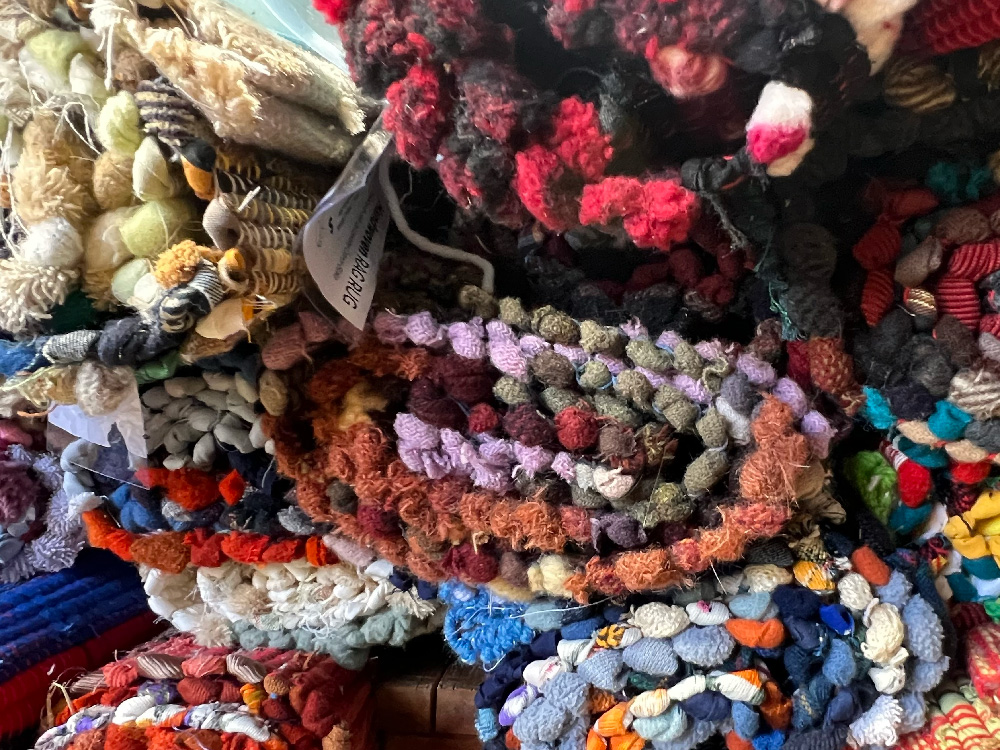
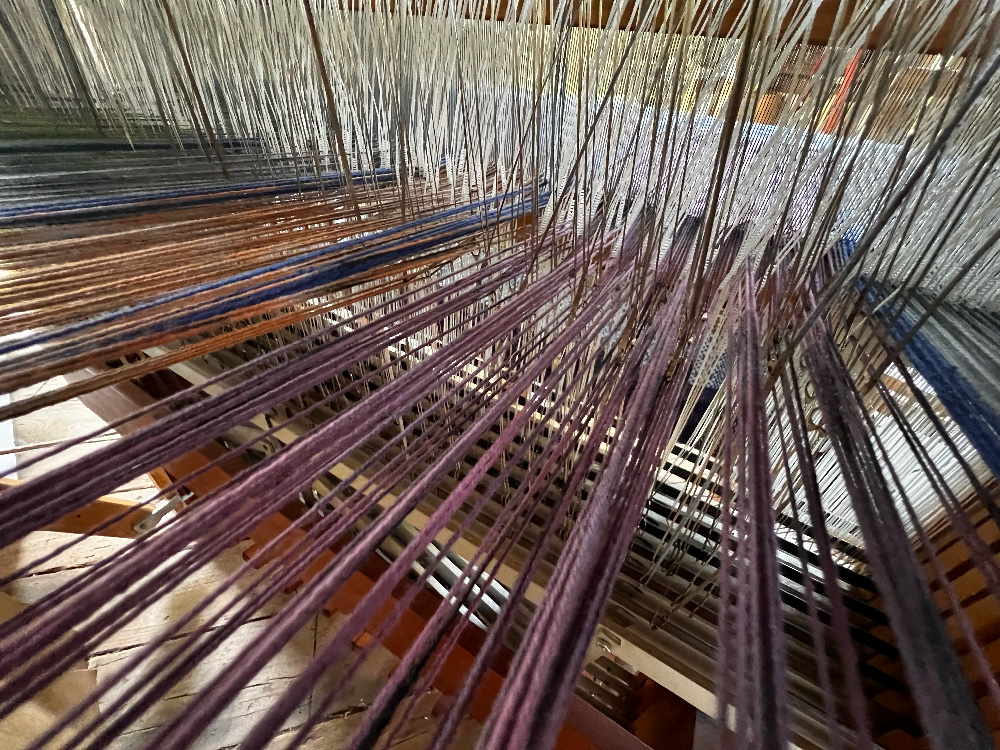
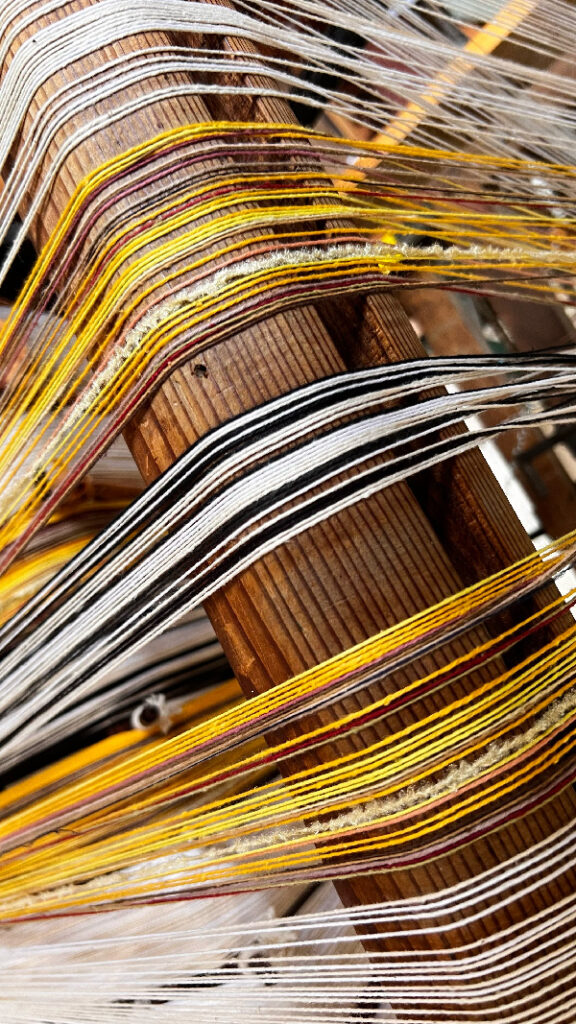
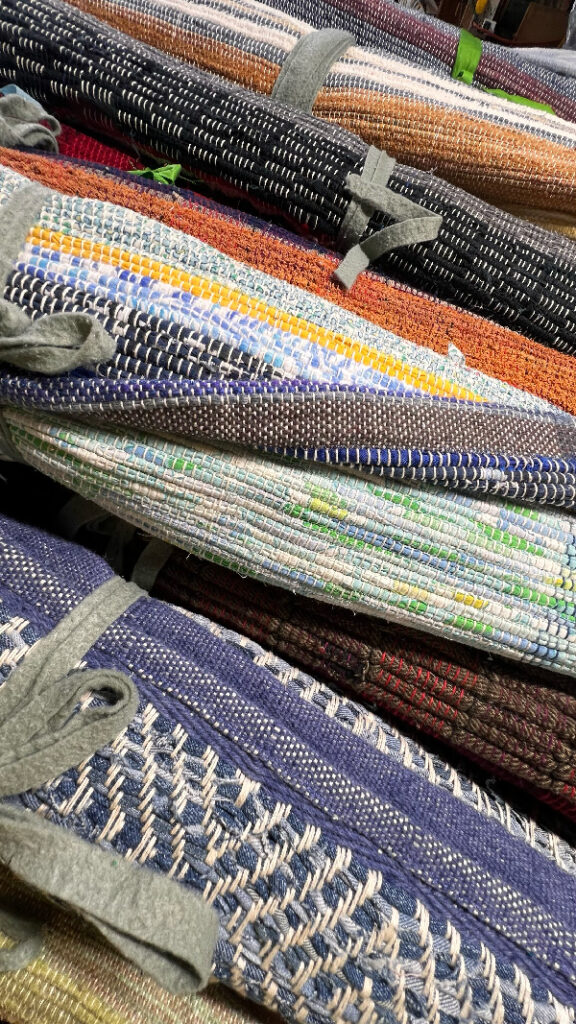
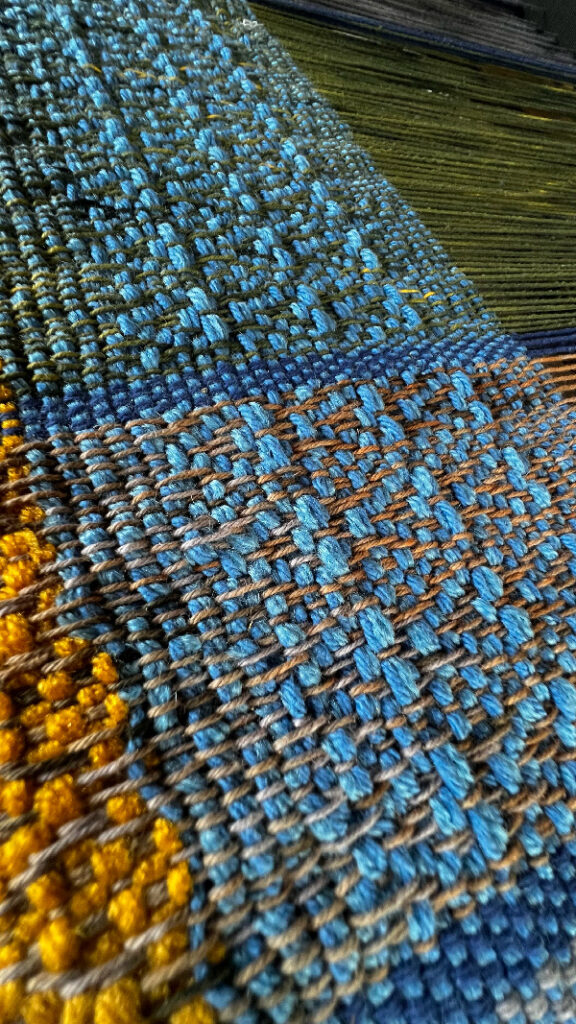
What I was coming to understand about Lorraine is that the same hands that laid down thin strokes of ink on fine paper and produced an intimate series of paintings entitled At Home with Birds, have also guided a shuttle back and forth between the taut lines of warp and tamped the weft tight tens of thousands of times. No ear buds, no radio playing, hour by hour she works steadily in the quiet of the barn, often in the evening amid the sounds of spring, summer, and fall. “The simple act of weaving is calming. Once I was a lake swimmer, now I’m a weaver,” says Lorriane. “They have something in common.” Indeed, life habits and qualities of soul are dynamically bound.
III
When personal computers gained popularity in the 1980s, enthusiasts quickly divided the world into two groups: early adopters and Luddites, the latter being those who spurn the advance of modern technology. Ah those foolish Luddites, whoever they were.
In fact, they were nineteenth-century British weavers protesting the automation of their textile mills. In his essay “Transitions of Power,” Michael Updegraff revisits the Luddite uprisings of 1811-1816 that began in Nottinghamshire, spread to other manufacturing sites, and turned violent:
Tools of various trades would be wielded—sledgehammers, axes, firearms—to gain entrance to the mill through windows and or doors. The night-raiders, often disguised, would file in and quickly destroy the power looms and stocking frames they believed threatened their livelihoods and trades. [1]
Automated looms were designed to accelerate productivity and increase owner profit. But the advent of powered looms would also inflict enduring losses. The acquired skills of Nottinghamshire’s weavers no longer had standing; their community of coworkers was disbanded; and generic goods replaced one-of-a-kind weavings. The longstanding relationship between a community of makers and their made things had been severed. Deeper still, certainty about their location in the cosmos was also at risk.
You might, at this point, anticipate a screed against technology but that’s not my view. Makers tend to cherish old tools. But we also admire the way a new open-end wrench perfectly matches a bolthead needing to be cinched tight. Cabinetmakers, machinists, and artisans of every stripe respect finely made tools and machines, old and new. Mastering them lies at the heart of our projects.
But technologies are seldom (maybe never) value free. From printing presses to steam engines and medical vaccines to solar panels, each new invention advances particular social and economic arrangements. The fundamental shift we are now observing has little to do with technology’s utility. Usefulness is assumed. Rather, for the first time in human history, systems of our own making are mastering us. At warp speed, AI has flipped the master-apprentice relationship and there is now unprecedented pressure for us to become willing supplicants to this new world order. Consumer capitalism—with us for a century or more—is the dynamic operating system that stitches this environment together.
For the longest time, virtual reality pointed to something less real, an approximation. Now, for too many, the virtual is so beguiling that, figuratively and literally, the actual is out of reach. If I can watch high-resolution video of someone gliding down the river on a canoe from the comfort of my recliner, why spend an entire day to accomplish the same? If DoorDash can quickly deliver food in containers I don’t need to wash, why start in dicing carrots, celery, and bacon? If the convenience of these arrangements is obvious, the existential and spiritual loss they inflict is almost impossible to measure. Like moths to the flame, we are daily transfixed by digital spectacle—one that, in the end, is not especially spectacular. Perhaps “Luddite” is a term of honor, not derision.
IV
Just recently I began reading Stewart Brand’s latest book, Maintenance: Of Everything (Part One) [3]. Brand, now 87, published the first Whole Earth Catalog in 1968. It quickly became a fixture of an American counterculture that celebrated romantic ideas about returning to Nature and raged against the Machine.
Maintenance of Everything is thematically related but has as its focus the significant impact of fixing and caring for the things and systems that make daily life possible. It is, therefore, in flow with the ascendance of a new maker movement that includes everything from the publication of handsome new journals featuring the crafts to the creation of urban maker spaces and from emerging farm to table food economies to new-found interest in how things actually operate. [4] (Have the How Things Work books we’ve been handing to our children and grandchildren gained traction?)
In our late modern moment, many are sensing a desperate need to recover and protect our humanity. In the face of rapidly advancing digital technologies, now supercharged by AI, artists and artisans like Lorriane invite us to consider more fundamental conceptions of making. And here an older understanding can help: Homo sapiens (man the thinker) is also Homo faber (man the maker). As God’s image bearers, we’ve been made to make. It is our nature, God given.
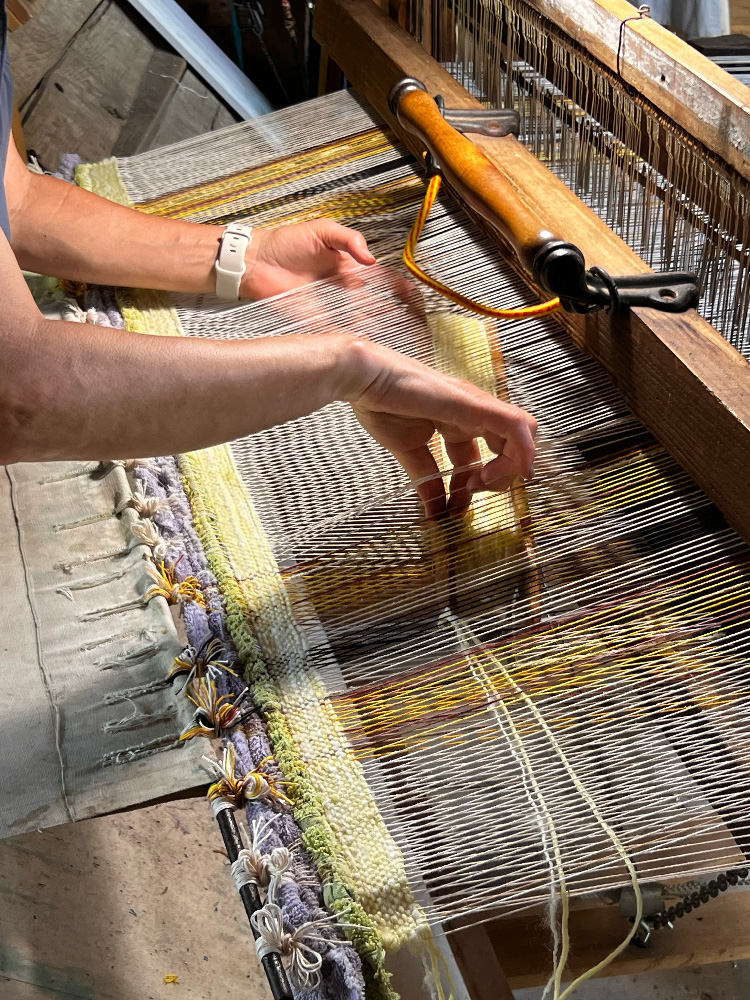
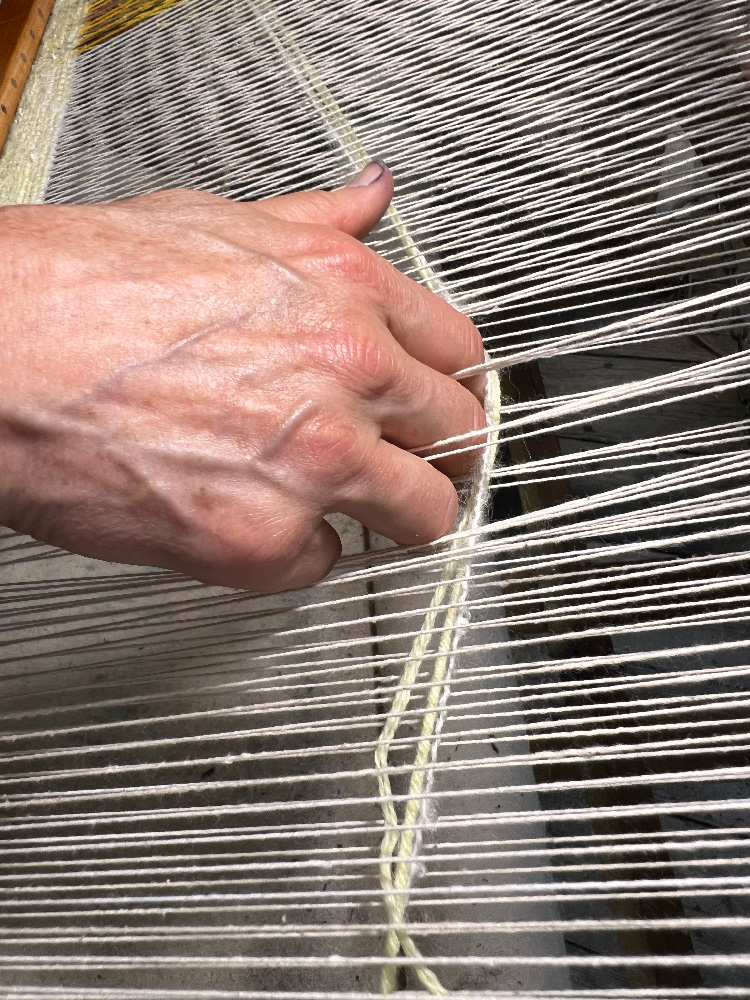
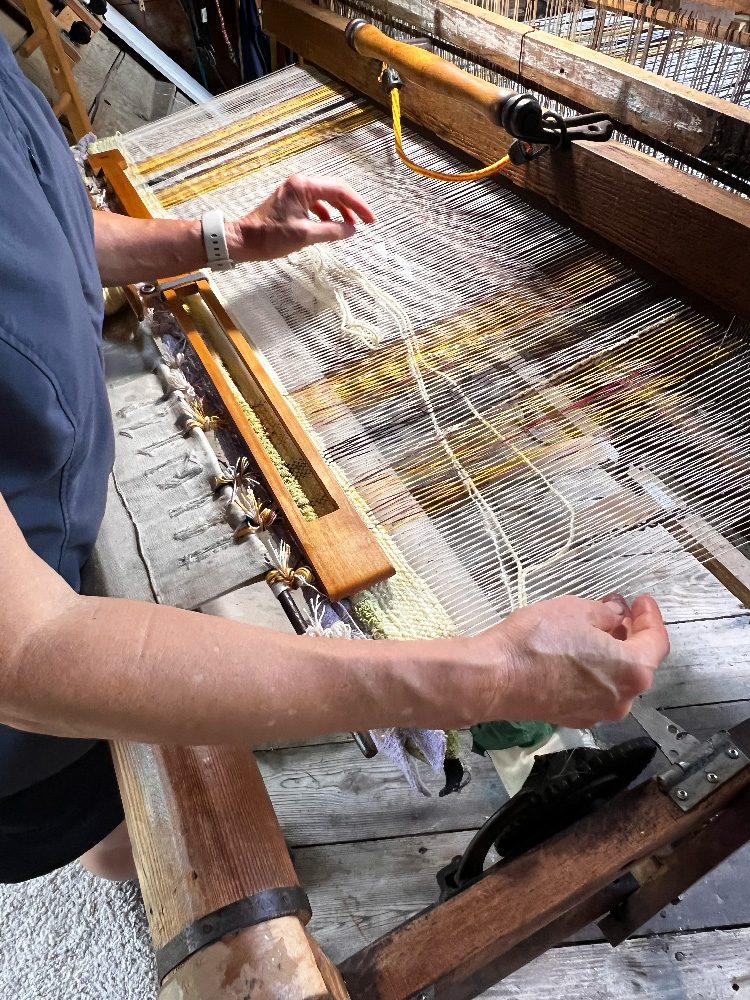
Since my teen years, I’ve considered things like hand-lettered text and handmade rugs important and done well, beautiful. These days I also regard this devotion to making an essential act of protest. It may be too late, yet still I wonder if the older ways of thinking and making paired with their manifold contemporary expressions could, bit by bit, displace our hyper-appetite for acquisition and advancement with renewed commitments to being and relationship. May it be so.
Notes:
[1] Michael Updegraff, “Transitions of Power,” Mortise & Tenon Magazine (10:2025), 39.
[2] See Paul Kingsnorth, Against the Machine: On the Unmaking of Humanity (New York: Random House, 2024), 273-284.
[3] Stewart Brand, Maintenance: Of Everything (Part One) (San Francisco: Stripe Press, 2026).
[4] Also recommended, Matthew Crawford’s popular Shop Class as Soulcraft: An Inquiry into the Value of Work (New York: Penguin, 2010), Peter Korn’s artfully written Why We Make Things and Why it Matters: The Education of a Craftsman (Boston: David R. Godine, 2011), and Alex Langlands’ engaging Cræft: An Inquiry Into the Origins and True Meaning of Traditional Crafts (New York: W. W. Norton, 2019).
I thank Pat Feldhake for permission to use her recent wildflower photos and Steven Rikkers for photos taken at Lorraine Ortner-Blake’s farm.